Thursday, January 1, 2026

Shiren the Wanderer (1): I’m in love with a roguelike


It’s never too late to fall in love. Especially with a gaming genre. 


'Roguelike' is a term I had encountered before in my gaming life and was vaguely familiar with. It’s fair to say that I knew at least the basics of the genre. I knew that the name 'Roguelike' was derived from Rogue, a cross-platform game released in 1980 that defined the mechanics of the genre. I knew that the said Rogue somehow single-handedly created dungeon-crawling as a gaming style, while at the same time setting itself apart from yet-to-be dungeon crawlers by sporting specific features like permadeath and random level generation. And, last but not least, I knew roguelikes were supposed to be hardcore and unforgiving. This, added to the fact that the most famous ones belonged to the PC realm, cemented my vision of roguelikes as games beyond my reach; games I knew about but would never play, mostly because I’m not a PC gamer, and maybe also a little bit because of their fabled difficulty. 


And then came Shiren the Wanderer on the DS, a game that blew away all those misconceptions and made me discover the delicious, pungent flavour of Roguelikes. 


Mystery Dungeon: Shiren the Wanderer, released on the DS in 2006(jp) and 2008(na/aus/eu), is quite an interesting game. It was developed by Chunsoft and is part of the Mystery Dungeon series, which I introduced earlier in my posts about Pokemon Mystery Dungeon. Shiren is the only Mystery Dungeon game featuring completely original characters instead of characters pulled out from a well-known series; and it’s also by far the hardest Mystery Dungeon game and the truest to classic Roguelike mechanics. It was initially released on the Super Famicom in 1995, and quickly enjoyed a huge popularity in Japan, which motivated Chunsoft to release no less than five sequels over a period of 15 years. Meanwhile, the western world remained widely unaware of this series and firmly set on the belief that Roguelike=PC=Diablo; that is, until Sega decided to publish a DS port of the original game in Japan and then, seemingly guided by a divine inspiration, to bring it to the West in order to expand our gaming horizons. We then discovered that there were indeed console Roguelikes—and excellent ones at that; but I’m getting ahead of myself there. 


First impressions


One can hardly talk about Shiren the Wanderer without mentioning first its graphics and soundtrack. Roguelikes being repetitive games by nature, it’s nearly mandatory to have graphics and music that are pleasant enough to the senses and will not bore the player to death after a few replays. And fortunately, Shiren totally shines in these departments. The graphics are clearly lifted straight from the Super NES era, with no visible enhancement; but they manage to convey some charm and create a really unique atmosphere, despite being undeniably primitive by today’s standards. As for the music themes, well… They are truly splendid. Composed by Koichi Sugiyama of Dragon Quest fame along with co-composer Hayato Matsuo, they are soulful, gorgeous pieces of ear candy that accomplish the tour de force of never becoming boring to the ear. Ever. Many of them have a cinematic quality and wouldn’t feel out of place in a movie, and they play a massive part in giving you the feeling that you are involved in a fascinating adventure. And if you’re familiar with the Dragon Quest games or with their soundtracks, you should click immediately when hearing the Pegasus Ridge theme, which is a more complex take on the World Map theme from the first Dragon Quest games. 


Let’s broaden the picture and talk about the general atmosphere of the game. The very sweet and lovely atmosphere, shall I say: for Shiren may kill you routinely and without mercy, but at the same time, it treats you with an atmosphere so gentle and loveable that you always want to come back to it and play more. I find this to be an extremely clever design choice: instead of conveying a gritty or dark setting that could increase the discouragement already caused by repeated deaths and prompt you to simply give up, this game puts you at ease with its lovely setting and makes you feel that dying over and over is not such a huge problem after all. 


And while I’m mentioning clever design choices, kudos must be given to the sheer brilliance of the random level design. It’s not brilliant per se, mind you, for no random level design can ever be considered truly clever. But in the context of Shiren, a game in which you are bound to replay levels over and over, it’s pure genius. Random level generation saves you the unbearable boredom of having to replay the same exact levels and provides some constant freshness to your explorations. 


By some strange and ironic twist, Shiren first reminded me of the Platformers of my youth. In the 8 and 16-bit era, you simply couldn’t avoid Platformers: they were ubiquitous and pretty much the dominant genre, and despite not being too fond of them, I played them just like anybody else. And I really found some similarities in the process of dying over and over and progressing a bit further—or not, as we’ll see later— every time. The platformers of old, especially the harcore ones, would submit the player to a similar test of patience with their die&retry approach; but that’s pretty much where the similarities end. Shiren is much, much deeper than any platformer, hardcore or not, and it doesn’t take long to notice that. I already mentioned the highly clever level design that saves you the boredom induced by many of these platformers with their never-changing layouts, but this is only the tip of the iceberg. Let’s now explore the depths of Shiren’s gameplay!


Diving into the game


To put it bluntly and candidly, Shiren is one of the most fulfilling gaming experiences I’ve ever had. 


This was definitely not what I expected when I picked up that game, and I was utterly surprised by this turn of events. What I expected was a punishing, frustrating and unrewarding game that would beat me to a pulp, because that’s the way Shiren was pictured in most reviews. What I discovered instead was a deep and engrossing game promoting patience, perseverance, strategic thinking and planning, all things I totally lap up in games. Shiren is the perfect gaming illustration of the Japanese gaman, which is the notion of enduring seemingly unbearable circumstances with dignity and patience. Like, the dignity of not smashing your DS on the floor when you die in the most stupid and unpredictable way and the patience to forge ahead with a smile instead.


Not that death is a problem at all in Shiren, oh no; perish the thought. (Ha-ha. Erm… Sorry.) Far from being an occurrence to be avoided at all costs or a punishment of sorts for your lousy gameplay, dying is part of the process of progressing through the game. It acts as a reset function that will allow you to further advance side quests: to put it simply, each run until you die is a loop, during which you can perform some actions only once. If you want to perform the said actions another time, you will have to die—or to use the “give up” command in the menu, which is technically the same as dying, only you decide to do so. This will save the progression you made in side quests and send you back to the beginning of the game, from which you can restart and further progress. 


This may be a bit too abstract, so let’s take examples. Recruiting allies is a process that includes several steps: you have to first meet them and talk to them, upon which they will either trick you or ignore you somehow. (I love how this differs from what you usually see in J-RPGs, where people you just met are ready to follow you to the end of the world after just five minutes of chatting. Shiren brings a healthy dose of realism to this whole party members matter.) If you want to recruit them for good, you will have to die/restart a few times in a row and interact with them every time until they finally join your party. The same goes for upgrading weapons at the local smithies: you can only do so once per run in every given smithy, so you’ll have to die/restart to repeat the process. 


As its core, Shiren is a purely iterative process. You progress through the game by increments, creating some accretion of experience and knowledge as you do so. The good old trick of level-grinding won’t get you far in Shiren: it’s all a matter of learning and building up solid bases that will lead you further and further into the game. In that regard, no run is totally useless: even the shortest one is likely to teach you something or help you advance a side quest. This is a fascinating experience, not unlike learning a new language, with its specific grammar and set of rules. You may learn at you own expense that throwing an item at an NPC will prompt the said NPC to retaliate by punching you to death, or that some of your allies are not as reliable as others. 


This learning factor is a key element in Shiren. Far from feeding you endless tutorials, this game lets you figure out its many rules mostly by yourself. The instruction manual gives you only the most basic information regarding menu navigation, completed in-game by random tips and clues offered by NPCs; as for the rest, you’ll have to try, observe, and learn accordingly. No hand-holding there: it’s just you, your brain, and the game. This is trial-and-error, only applied to a whole game world instead of just specific traps in a level; and it’s incredibly stimulating and thrilling. Not only that, but this learning process will carry on through the whole game, from the first dungeon floor to the last, keeping the game fresh and challenging up to the very end. 


And you will need all the knowledge you can get, along with clever planning and honeying of your equipment: for Shiren is an unpredictable beast, and one that can lash at you when you least expect it. There is definitely an element of randomness and unpredictability to that game, which adds to the challenge and forces you to use all your knowledge to the fullest. You never know what to expect from a dungeon floor, let alone from a whole run. You may die at the first floor surrounded by a mass of enemies, or you may have a massive breakthrough and make it all the way to a floor you never reached before. You have to learn to bend circumstances to your advantage and get hold of the game’s randomness, and this is a truly fascinating and exciting thing to do, especially when you finally succeed.


It’s worth noting that Shiren, while being demanding, remains fair to the player. The difficulty curve is well-balanced and quite regular, and you will definitely notice and feel your own progress. To breeze through a dungeon floor that felt incredibly difficult just a few hours before is a sheer joy, and one that is bound to repeat itself through the whole game. Shiren shows even more fairness by giving you the possibility to train yourself and get the feel of the various traps awaiting you before you encounter them for real in dungeons. This can be done in the so-called Fey’s Dungeon at the very beginning of the game, where you will be offered fifty puzzles of strategic nature with increasing difficulty levels. These puzzles replicate situations that can happen in dungeons, and mastering them will definitely give you some strategic advantage and an edge over your many foes, on top of being an absolute treat for puzzle lovers. 


So, that’s Shiren in a nutshell, from a beginner’s point of view. I’ve now played the game for 15 hours, reached floor 17, and I’m taking my sweet time. I’m planning to play this game as a red thread over the course of several weeks, maybe months, and I will of course give my final thoughts on the matter when I’m done with it. But for now, I plainly and simply adore it. I adore it so much that I’m firmly planning to buy the full series, which will give me a great incentive to dive back into my long-forsaken Japanese studies. I just can’t let a series that good pass me by. 


This prompts me to mention how poorly received was Shiren in the West, for it may well be the reason why we didn’t get to play the subsequent installments. Critics lambasted Shiren for being too unforgiving, punishing and not rewarding enough, to the point where I actually formed the mental picture of a game that was more torture than entertainment and would whip me good and shatter my soul. None of this happened, as I stated above; far from it, I actually found Shiren to be easier—yes, easier—and globally much more forgiving than I had expected. This is the Avalon Code syndrome all over again: a good game that is dismissed and sniffed at because it’s at odds with the current gaming trends. In the era of general hand-holding, intrusive in-games tutorials and scripted games playing on rails, the notions of figuring out a game’s mechanics on your own and progressing through increments while doing so was not likely to make a hit. Which is a shame, for Shiren is quite the gem. Oh, well.


That’s all about Shiren for the time being. Expect at least another post on the matter when I’m done with the game, and maybe more, if it inspires me. As for now, thanks for reading, and be my guest anytime!

(Edit: The rest of my Shiren epopee can be found here, there and there.)

Senran Kagura Burst (2): Too much of a good thing


Here’s my second post about Senran Kagura Burst, and it will focus on the less stellar aspects of the game. After all the praise I lavished upon it, it should be pretty clear that I really loved SKB and had tons of fun playing it; however, my warm feelings for the game didn’t make me blind to its flaws. For SKB does have flaws, indeed, and rather noticeable ones at that; they are not deal-breakers, but they are present nonetheless and must be addressed, if only for the sake of equity and information. Without further ado, let’s examine SKB’s less glorious bits!


Bigger is not always better


The first blatant flaw that I want to cover is the one I alluded to at the end of my first post, namely the overabundance of content. The game is divided into two distinct storylines, the Hanzo Arc and the Hebijo Arc; both contain five chapters, each chapter comprising fifteen stages. Multiply this by the total number of characters, namely ten plus two hidden ones that can be unlocked once you beat the final boss, and you get a staggeringly humongous beast of a game that obviously require dozens of hours of gameplay to be cleared entirely. Despite my best efforts, I didn’t manage to reach 100% completion for a single character route, let alone for the whole game, and I shudder while thinking of the amount of time needed to achieve such a feat. But wait, why exactly is that such a huge issue, you may ask? Well, that excessive length is not an issue per se, but it is in SKB because of the nature of that game. Senran Kagura Burst is a Beat’em Up, not some J-RPG that has a complex story to tell. Beat’em Up being repetitive by nature, probably much more so than any other genre under the gaming sun, it is nearly necessary is to keep them tight and short in order to offer a fulfilling experience. Code of Princess understood that perfectly and kept its main campaign reasonably short while offering a lot of replay value thanks to its roster of characters. SKB, on the other hand, was way too greedy and over-expanded itself to the same absurd proportions as the bosoms of its heroines; as a result, it suffers from a watered-down, spread-out design that dilutes its intensity. The main campaign is drowned under tons of extra stages that recycle already used settings ad nauseam, and it is absolutely impossible to clear the full game in one go, which definitely robs you of the pleasant experience of picking up the game and completing a full run in a couple of intense hours. Of course, there is still the possibility of picking up the story-related stages one by one and clearing these only, but it’s still not as satisfying as having a clear-cut main campaign that flows smoothly as you pummel everything in sight. 


This overabundance of content may also seriously wear down the player. Heck, it certainly wore me down: when I first picked up the game, I was absolutely set on clearing both Hanzo and Hebijo Arcs and reaching 100% completion for all characters. I laugh at my own naivety now: by the time I finished the Hanzo Arc, I was starting to suffer from a serious case of gaming fatigue, and I had not managed to reach 100% completion for a single one of the Hanzo shinobis. (I was three stages away from it with Azuka, though, but kept failing because of another main flaw of the game, which I will expose right after I’m done with this one.) I tried to soldier on and started the Hebijo Arc, but didn’t reach very far, although the story seemed interesting and just as compelling as the Hanzo Arc one. I was just getting exhausted and tired of the game, and one day, I put it down for good and stopped playing it entirely—literally from one minute to the next. Now that’s a case of gaming burnout if I ever saw one. Maybe I’m the only SKB player who lent into this, but I’d wager that I’m not. The game is just too enormous not to exhaust most of the players who would dare trying to clear it in one go. Of course, maybe that was a foolish attempt in the first place: SKB is two games combined in one, after all, and common sense would dictate that one should let some time pass before tackling the second half of the game. This doesn’t change the fact that whether they are taken together or separately, these two games are bursting at the seams and way too gargantuan for their own good, as well as for the player’s one. 


Unbalance averted—or is it?


In my first post, I praised the sheer equilibrium of the roster and the fact that all the young shinobis were so neatly balanced while offering a delightful variety of highly functional fighting styles. Well, it’s time to smear that near-perfect picture a trifle: the fighting styles are all functional indeed, but some are definitely less functional than others, which in turn leads the characters that wield them to be definitely less balanced than others and ruffles the equilibrium of the whole roster ever-so-slightly. Not to the point of breaking the game, mind you—far from it—but enough to be noticeable and mildly annoying at times. The Hebijo Arc is the most affected by this slight unbalance, which is not so surprising: since the Hebijo shinobis are supposed to wield more unorthodox weapons than the Hanzo shinobis, designing their respective fighting styles was a bit of a challenge per se, and one that Tamsoft didn’t completely manage to step up to. While Homura and Hikage are a treat to fight with, the other three are a trifle harder to handle. Yomi is uncomfortably slow, Haruka is as stiff as a board and has pitifully inefficient Secret Arts, and Mirai… Well, whoever came with the idea of letting Mirai wield mostly long-range attacks must have secretly hated Beat’em Ups. The last thing I want when playing a Beat’em Up is to be forced to retreat constantly in order to have enough room to shoot at enemies. If I wanted to do this, I’d play a shooter, thank you very much. A couple of long-range attacks are fine, but the bulk of one character’s attacks being long-range ones? That’s over the top, and entirely impractical to boot. The Hanzo Arc is not entirely exonerated from unbalanced characters: Daidoji, the extra character unlocked after beating the final boss, is so slow and heavy that it’ll make you want to scream and shake the 3ds. Don’t get me wrong: this quatuor is still very much playable, but they come across as uncomfortably clunky compared to the rest of the roster, which is a pity.


A much more serious unbalance lies within the game, and one that can seriously ruin your fun and prevent you from enjoying the game to the fullest—and I mean that literally. See, the reason why I couldn’t clear a single character arc is because I kept failing at a couple of missions; and I kept failing at them because SKB’s difficulty level suffers from a blatant case of unbalance. Some trash mobs use long-range attacks that can pretty much drain your life bar in three hits, all the more so if you’re playing in Yin Mode: when you’re pitted against a dozen of these pests like in some of the harder missions (the ones I kept failing at), there is very little chance to last more than ten seconds, let alone survive the whole ordeal. Oh, that is certainly possible after many tries and with a lot of practice, but the difficulty level of these missions is seriously uncanny. To make matters worse, there is no parry move and very few of the shinobis wield long-range attacks themselves, which puts you in a highly vulnerable position against these accursed foes. On the other hand, the boss battles that pit you against the shinobis of the opposite clan are disappointingly easy: you can breathe through them by cornering your opponent and spamming them with hits. They won’t try to escape, and if you hit hard and fast enough, they won’t be able to squeeze an attack either. These shinobis are supposed to be the elite of their respective schools, and yet they’ll make you sweat considerably less than a bunch of trash mobs with long-range attacks: now that’s what I call unbalanced difficulty. This is both ridiculous and frustrating, and I can only hope that Tamsoft fixed that issue in the subsequent Senran Kagura instalments.


Too much, too little


Last but not least in that litany of flaws is, well… the fan-service. Now, branding the fan-service as a flaw may seem like a paradox after I spent a couple of paragraphs explaining how inoffensive, unobtrusive and humorous it was in my last post; and yet, I stand by all of these statements. The problem lies in the dosage of the fan-service: the amount of fan-service present in SKB is such that no matter how you look at it, there will very likely be either too much or too little of it to satisfy players. 


The “Too much” side is a no-brainer: every gamer who loathes fan-service in any way, shape or form will obviously avoid that game at all costs, possibly slandering it in the process and raging against developers who use dirty tricks to force their games on people. These gamers may miss an excellent Beat’em Up in the process, but they will abide by their own moral rules about gaming. Then, you have the gamers who are mildly disturbed by fan-service: they may buy the game and play it, but they will do so with a grimace of distaste and will cringe regularly at the sight of the fan-servicy bits, which will make the game an underwhelming experience in their eyes instead of the blast it could have been. 


But there is also the “Too little” side. A gamer who openly bought this game for the fan-service may ultimately be disappointed by how tame the fan-service actually is, and may feel that there is not nearly enough of it to satisfy their peeping urges. For every five seconds of risqué bits, you have to trudge through dozens of minutes of demanding fighting, which is hardly conducive to titillation. The ridiculously salacious European box, with its raunchy cover art and dirty innuendos in the game’s description, may be blamed for ramping up expectations way too high: anyone who expects a similar level of lewdness in the game is in for a huge letdown. I never came across any complaints regarding that particular point—gamers are usually busy arguing if such a game should have the right to exist in the first place—but I’d wager that some people have been disappointed, even though they were not vocal about it. Heck, even I was nearly disappointed that SKB was not as lascivious as it promised to be, despite the fact that I don’t care one bit about fan-service in games.


This leads us to a striking conclusion: it's very likely that the gamers who will be the most satisfied and at ease with the fan-service involved in SKB are the gamers who do not care about fan-service either way. I am one of these, my stance towards fan-service being similar to my stance towards gorgeous graphics: they will never be the main reason why I purchase a game, but if they don’t hinder the gameplay nor steal resources that should have been allotted to it, then I’m perfectly fine with them and can even appreciate them if they are to my retina’s liking. And sure enough, I loved SKB and would be ready to praise it without the slightest hint of shame. There’s some biting irony at work here, and that irony colors with sadness when one ponders that for all the attention it drew to the game at the time of its release, this campy fan-service coating may well taint its legacy on the long run. Risqué games may create an uproar when they land on shelves, but they never reach a cult classic status or enter any gaming hall of fame: as time goes on, they become a curiosity, something to giggle at, sneer at or shake your head at with a rueful smile, but certainly not something to play, let alone love. Any gamer knows Cluster’s Revenge, but no gamer would call it a cult classic or even a remotely good game. SKB will probably follow the same path and be remembered only as “this game that let you ogle at female bits in 3D”, without the slightest mention of how excellent a Beat’em Up it is. That’s a pity and a shame, really. 


However, that will not prevent me from being fond of Senran Kagura Burst and replaying it in the future. This is a fantastic Beat’em Up, and if you’re a fan of the genre and can stomach the fan-service, I would most definitely recommend it. I would not recommend it to someone who wants to get loads of fan-service first and foremost, not try to convince anyone who hates fan-service to give it a try for the sake of its other qualities; there are tons of eroge and fan-service-free Beat’em Ups out there that are bound to satisfy such gamers way better than SKB could. I will certainly take a look at the subsequent entries, all the more so as the Beat’em Up genre is not exactly at its peak these days: an ongoing Beat’em Up series with several games under its belt is nothing to be sniffed at, and I can only hope that the other Senran games will turn out to be as excellent as Senran Kagura Burst, maybe even stepping as far as correcting their elder’s flaws. Thanks for reading, and be my guest anytime!

Senran Kagura Burst (1): There’s more than meets the eye


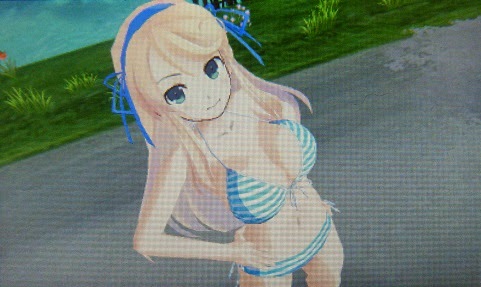
“Meets the eye” is the right expression, indeed. Heck, “tries to pierce it” would be even closer to the truth. Never before had I played a game that tried so actively to perforate my retinas with glorious displays of perky bosoms and bottoms—and I was not even playing with the 3D on. 


We’re now tackling Senran Kagura Burst, a game that became famous—and infamous—for all the wrong reasons. Developed by Tamsoft and released in 2012(jp), 2013(na) and 2014(eu) for the Nintendo 3ds, Senran Kagura Burst (SKB for short) is actually a combination of two games, namely Senran Kagura: Skirting Shadows and its sequel Senran Kagura Burst. Both of these games are classic side-scrolling Beat’em Up à la Streets of Rage featuring a variety of characters with distinctive fighting styles. However, you’d be forgiven for missing that piece of information: from its very inception, the SKB series has been marketed nearly exclusively as a naughty, kinky game that would let you peek at young women’s ample bosoms and behinds through their ripped-off clothing. Since the series was kick-started by one developer’s somewhat mundane desire to see female anatomy displayed in glorious 3D on the 3ds, such a turn of events shouldn’t be too surprising. This is a heavy legacy to bear—in more ways than one—but SKB does so with grace and ingenuity and manages to emerge unscathed from the unsavoury marketing campaign that surrounded it. Behind the game’s busty chest beats a heart of gold: SKB is actually an excellent Beat’em Up that has much more to offer than a couple of risqué shots. There’s more than meets the eye, indeed; let’s now explore SKB’s often-overlooked goodness!


The elephant in the room


Let’s be honest: talking about SKB without mentioning the fan-service is purely and simply impossible. It’s so blatant and purposeful that you cannot ignore it, and every review of SKB under the gaming sun has commented on it, with tones ranging from ecstatic to disparaging. I might as well do the same—and start with it while I’m at it, since SKB’s fan-service is so in-your-face, basking in the spotlight like an attention-hungry teenager. Or is it? 


Well, that was the first pleasant surprise SKB had in store. The fan-service is nowhere near as extreme and/or pervasive as you’d imagine by seeing the European cover art—as a matter of fact, this cover is ten times raunchier than anything you will witness in the game itself. The Shinobi transformations, during which the ladies change from their school uniforms into their personalized Shinobi outfits in order to gain extra strength and speed, really don’t show that much flesh. They look like shortened versions of the Sailor Senshi transformations with a heavier emphasis on bottoms and bosoms, but it really doesn’t get more scandalous than that—as a matter of fact, you’ll probably see much more flesh in a Sailor Moon episode than in a session of SKB. As for the infamous shredding bits that let you see the ladies’ outfits being ripped into pieces, they are incredibly brief—blink and you’ll miss them entirely—and really don’t show that much flesh either. To make the fan-service even more inoffensive, all these already rather mild and short sequences can be skipped entirely by pressing the Start button, which will probably be a blessing for everyone at some point: even the most ravenous fan-service aficionado has to get bored after seeing the same snippets a hundred times. 


Furthermore, the game turns out to be surprisingly conservative in some ways. The story-telling segments are unexpectedly sober and subdued: instead of ramping up the fan-service and drowning the player under tons of risqué close-ups as one would have expected, the game favours a more dignified approach by displaying long lines of text over pictures of various empty sceneries. Kinky jokes and innuendos are very few and far between, and the couple of shots of the young ladies that appear during the storyline segments are really quite tame. Even the stripping mechanics are not that risqué when one ponders it, and it boils down to a simple reason: the ladies wear swimsuits as underwear instead of lingerie. While swimsuits don’t cover much more than lingerie and still have some kind of erotic charge (especially in Japan), they are still ten times less suggestive than your average lingerie. Having the ladies don swimsuits seriously defuses the eroticism of the stripping sequences and makes them feel more like pool trip antics than like raunchy peeping sessions. 


Last but not least is the fan-service’s saving grace, which is none other than the delicious irony that pervades it. SKB’ s brand of fan-service is self-aware and self-derisive: the developers joyously take the piss out of their own fan-service obsession—and the player’s one as well—by inserting tongue-in-cheek jokes and puns about their own design choices. The fact that the young ladies wear swimsuits also has a ring of irony to it: it’s nearly like the characters are being aware that they are going to be peeped at and donned swimsuits in order to be prepared for it, taking the piss out of the player in the process. And let’s not even mention the relaxed and  playful atmosphere created by the all-female setting, which has the girls bantering joyfully, acting in ways that could definitely be considered un-sexy, not caring in the slightest about having their body parts exposed and being friendly and supportive towards one another instead of worrying about their looks and vying for male attention like in your average harem RPG. Oh, and there is also the hidden irony at works behind the ripping mechanics: having your clothes ripped into pieces may be serious eye candy, but it’s not a good thing as far as gameplay is concerned, since it means that you’re heading closer to defeat; and the better you become at playing SKB, the less shredding—and flesh— you will see. It doesn’t get any more ironic than that, really. 


So indeed, there is some fan-service at work in SKB; however, it represents only a small fraction of the whole game, and that fraction definitely more comes across as more campy than salacious. Most importantly, it doesn’t desecrate the ladies; and that makes complete sense, since you actually play as them. No gamer can enjoy to see the very character(s) they incarnate being routinely mistreated and humiliated, and Tamsoft understood that perfectly. More than that, they actually went to great lengths to flesh out the young ladies and turn them into interesting characters that the player can care for as well as relate to. Without further ado, let’s see how this was done!


Fleshed inside out


There is no doubt that the ladies were generously fleshed out as far as their measurements were concerned; however, their personalities were not forgotten and have been given as much care and love as their body lines, if not more. 


On the narrative side, each of the young dames was granted her own private backstory, as well as a personalized ending that can be uncovered when meeting certain conditions (namely clearing every single mission in Yin Mode, which is easier said than done). Those backstories are both interesting and touching and give a great incentive to relate to the ladies; they may be young, but their struggles and responsibilities are heavy ones indeed. Their personalities are equally clear-cut and distinctive; and while said personalities are a little bit on the cliché side (the inexpressive and nearly mute girl, the ever-smiling clumsy one, the dignified one with a serene look and so on), they remain endearing and compelling. It is a real pleasure to discover the ladies as you play the game, and caring for them as well as relating to them comes  as naturally as delivering blows (more on that later, he he). 


This commendable attempt at crafting deep and moving characters is conveniently consolidated by subtle yet effective features. The voice acting is the most blatant one: it is amazingly good and fits the ladies’ personality like a glove, and is a pure pleasure to listen to—and this is coming from a person who usually hates voice acting in videogames. Another element that may take more time to sink in is the fact that each girl is granted her own individual musical themes during the fighting sessions, both in Normal and Frantic Modes; and amazingly enough, these themes manage to fit their personalities just as well as the voice acting—and they are pure ear-candy to boot. 


The fact that this crew of young dames is as nicely fleshed out outside of battle is already pleasant enough, but there is even better in store. This is a Beat’em Up after all, and Beat’em Ups are typically the kind of games in which characters’ personalities should shine first and foremost on the fighting field, in the heart of some red-hot action. And fortunately, SKB gloriously delivers in this department and doesn’t disappoint one bit. The ladies’ respective fighting styles are as distinct as they could be while remaining totally functional (or nearly so—more on that later). Each girl has her own moves, special attacks and weapon, and they are all neatly polished and carefully balanced. Granted, some of the ladies are a teeny-weeny bit stronger and some a teeny-weeny bit weaker than the rest of the crew, but the differences are kept to a minimum and don’t hamper the gameplay nor drag the game down in any way. At any rate, it’s an absolute pleasure to try your hand at so many different fighting styles, and getting to know and master each girl’s distinctive way of kicking butts certainly goes a long way in establishing them as rock-solid characters. And that’s quite a good thing, since kicking butts is, after all, the primary point of the game.


The name of the game


Indeed, it may seem a bit pathetic to cover all things fighting only at the end of that post, knowing that SKB is first and foremost a Beat’em Up; but it was hard to proceed otherwise. I’m following an agenda set by the game itself, willingly or not; and since SKB clamoured for attention in the most unsavoury way by aiming straight at the player’s groin, I first had to dismiss the idea that this game is just a load of fan-service crap. Now that the deed is done, we can pore over the heart of the game, namely the butt-kicking. And boy, is it good. 


A Beat’em Up lives and dies by its physics, and SKB’s physics are absolutely brilliant. The control over your character is total, with no trace of the sketchiness or wobbliness that plagues games such as Code of Princess, and foes have a kind of pleasant density that makes the fighting incredibly fulfilling—you can really feel yourself punching them, so to speak, and it’s quite the guilty pleasure. The action is fast-paced and nervous, and combat is very much aerial-based: the most devastating combos are performed in the air and a couple of aerial attacks are available, as well as a double jump which is an absolute blessing and can be a life-saver at time, especially when combined with the aforementioned aerial attacks. And there is a dedicated jumping button to boot, saving you the trouble of having to fumble with the analog stick. 


Talking about buttons, it’s worth mentioning that SKB keeps things as simple as possible in that department and spares the player a lot of button-mashing. You never need to press more than two buttons at a time to perform any action, and the combos are based solely on various combinations of the X and Y buttons—displayed at all times on the touch screen for your convenience. SKB is as close to as beginner’s Beat’em Up as it gets, while remaining deeply fulfilling thanks to the sheer variety of moves that you can execute—a variety made even wider by the size of the roster. 


Said roster, and the array of fighting styles that comes with it, is most definitely another highlight of SKB. Each of the shinobis offers her own interpretation of the fighting system, prompting you to adapt your way of playing accordingly. This is obviously a staple of the genre, but SKB pulls it out better than most Beat’em Ups. Each girl is obviously endowed with her own exclusive combination of speed, strength and endurance as well as granted her own private combos—this was already the rule in Streets of Rage, and it’s still valid today. SKB then pushes the envelope a tad further by allotting different ranges and areas of effect to each lady’s Secret Arts (i.e. powerful special attacks), and pushes it even further by giving the same treatment to their regular attacks. This could have ended up as a giant mess of unbalanced characters, had things not been handled admirably well; what you get instead is a lively, vibrant and multifaceted fighting system that can nearly give you the feeling that you’re playing a different game every time you switch characters—expect that you’re not, so you still have the benefit of fully mastering the game’s commands. This obviously gives SKB a huge amount of replay value; as a matter of fact, I’ve been playing the game for a good twenty hours and still didn’t fully explore all the variations of the fighting style embodied by the ladies. 


When all is said and done, and when one looks beyond the campy fan-service coating, Senran Kagura Burst is a gloriously good game. It’s a fun, lively and exuberant Beat’em Up that offers a rock-solid and exhilarating fighting experience, as well interesting characters that are highly loveable and relatable and a touching storyline. The wealth of content packed by SKB is truly staggering: there are so many different modes, stages and fighters that you can rest assured that your initial investment in the game will be recouped several times over. The amount of content is actually so enormous that it borders on being overwhelming, leaving the player queasy and with the feeling that there is way much more than they can chew and that they will never see the end of it. I’d like to elaborate on that point, as well as on the other flaws of Senran Kagura Burst; however, this post itself is on the verge of becoming overwhelmingly huge and indigestible, so these matters will have to wait for my next post, which will be dedicated to the less glorious aspects of the game. Thanks for reading, and be my guest anytime!